{{title}}
{{description}}
Read more

The Vaillant Group takes responsibility – for the environment, its employees and society at large. As a leading supplier of heat pump solutions, the company supports the transition towards a lower-emission heating technologies in the building sector. Sustainability is the foundation of all our business activities. Since 2010 the Vaillant Group has brought together all related activities and objectives under its sustainability programme, SEEDS.
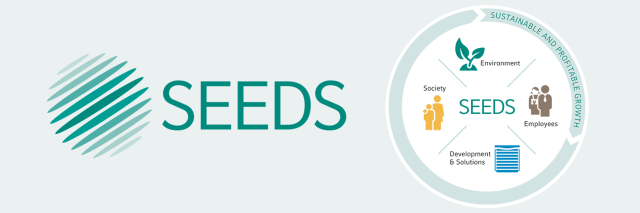
SEEDS stands for “Sustainability in Environment, Employees, Development & Solutions, and Society.” Across these four focus areas, the company pursues specific Sustainability goals. The binding climate transition plan translates the sustainability goals into concrete actions, responsibilities, and measurable results.

A 50% reduction in CO2 emissions by 2030 will be achieved through:
Optimising energy consumption in production processes and buildings
Investing in an grafual electrified vehicle fleet and lower-energy-consumption vehicles
Sourcing 100% electricity from renewable energy for administrative and production facilities

Diversity, Equity & Inclusion (DEI): equal treatment and appreciation of all employees
Tailored training and development programmes for all employees
Preference for internal candidates when filling management positions
Clear ambition in occupational safety: zero workplace accidents. On the path towards this goal, the lost time injury frequency rate (LTIFR) is to be reduced by 25% by 2030

One of the leading supplier of energy-efficiency heat pumps designed to utilize renewable energy for heating and hot water
Continuous measures to reduce greenhouse gas emissions associated with the product lifecycle, from material sourcing and production to product use
Supporting circular economy principles through product design that considers dissembly and recycling, as well as the increased use of secondary raw materials in line with our SPARC product strategy from 2030 onwards
High quality standards to ensure durability and ease of repair
Measures to reduce the use of packaging materials and packaging wast

Comprehensive processes to uphold human rights within a company-wide Social Compliance Management System
Mandatory environmental and social standards at our suppliers
Exclusive partnership with SOS Children's Villages Worldwide since 2013
Commitment to the Ten Principles of the UN Global Compact

For more than ten years, the Vaillant Group and SOS Children’s Villages Worldwide are linked by an international partnership.
Through verifiable and transparent climate targets, as well as a publicly accessible and binding climate transition plan, and the reduction of greenhouse gas emissions across its operations, the Vaillant Group is fulfilling its corporate responsibility. The company’s objective is to make a measurable contribution to global climate goals.
* compared to the 2018 baseline
The Vaillant Group follows the approach of science-based climate targets (Science Based Targets) and has defined its goals in line with the requirements of the Science Based Targets initiative (SBTi). In doing so, the company aims to significantly reduce CO2 emissions both within its own operations (Scope 1 and 2) and across its value chain (Scope 3).
Since 2018, the Vaillant Group has been calculating its greenhouse gas emissions on an annual basis, based on energy consumption (including fuels, gas, electricity and district heating), in accordance with the Greenhouse Gas Protocol – a globally recognized standard.


Green electricity: Since 2020, all Vaillant Group administrations and production 96*-sites have been supplied with electricity from renewable energy sources.

Optimising energy consumption: A wide range of efficiency measures – such as the transition to electric company cars and the conversion of existing heating systems in company buildings to hybrid solutions – help to reduce the Vaillant Group’s gas consumption and the associated CO2 emissions.

Environmental management system: At production and development sites, continuous measures are implemented to reduce energy and water consumption as well as waste volumes.

Company fleet: The gradual transition to vehicles with lower energy consumptionand , where technically feasible and economically viable, to electrified vehicles. In line with its Climate Transition Plan, the share of electric vehicles is targeted to reach at least 25 to 30% by 2030. At the same time, the company is investing in the expansion of charging infrastructure at its sites.

Forests are capable of sequestering CO2, a greenhouse gas that contributes to climate change. In Costa Rica, the Vaillant Group operates its own Gold Standard-certified project to reforest degraded areas. In addition, the company is committed to regional nature conservation in the Bergisches Land region. Together with the Remscheid Forestry Cooperative, the Vaillant Group has initiated a reforestation project at the Neyetal reservoir.
The United Nations’ 17 Sustainable Development Goals (SDGs) provide a globally recognised framework for a socially equitable, environmentally sustainable and economically viable future.
The Vaillant Group’s business activities are closely aligned with the SDGs. Its SEEDS sustainability programme focuses in particular on the areas of environment, employees, development & solutions, and society. The company’s Climate Transition Plan translates sustainability ambitions into defined measures, responsibilities and measurable targets. Through the integration of sustainability considerations into its business activities, the Vaillant Group seeks to support selected United Nations Sustainable Development Goals. In addition, relevant sustainability requirements and standards are communicated to business partners and suppliers and integrated into relevant processes.

Social justice and environmental responsibility are also central to the United Nations’ sustainability goals. In support of these objectives, the Vaillant Group engages in selected networks such as BAUM e.V. and the Science Based Targets Initiative.
The Vaillant Group measures its emissions in accordance with the internationally recognised Greenhouse Gas Protocol. This framework distinguishes emissions by so-called “scopes”, i.e. responsibility categories across the entire value chain. While Scope 1 and Scope 2 fall within the company’s direct control, Scope 3 represents shared responsibility with suppliers, partners and end users.
Scope 1 emissions arise from the use of fossil fuels such as gas and fuels in production and administrative buildings, as well as in the company’s vehicle fleet.
Scope 2 emissions comprise greenhouse gas emissions generated in the production of purchased electricity, heating and cooling. In addition to carbon dioxide, all other relevant greenhouse gases in line with the Kyoto Protocol are taken into account and converted into CO2 equivalents to ensure comparability.
Scope 3 emissions occur along the upstream and downstream value chain. These include emissions generated in the production of purchased goods and in upstream and downstream services, as well as emissions from the supply chain, transport and the use of products. Responsibility for these greenhouse gas emissions is shared by the Vaillant Group with its suppliers, business partners and customers.
The level of emissions generated during the operation of a heating system depends on factors such as the energy source, the energy standard of the building and individual heating behaviour. With high-efficiency heat pumps, condensing systems, digital technologies and advanced control systems, the Vaillant Group provides energy-efficient solutions designed to support the responsible use of energy and resources.
The Vaillant Group’s objective is to ensure the protection of human rights within the company, to promote compliance throughout its global supply and value chains within the scope of its influence, to establish transparency regarding potential risks, and to take appropriate action in the event of human rights violations. In addition to environmental standards, respect for human rights is firmly embedded in the Group-wide Code of Conduct.
The Vaillant Group’s policy statement on respect for human rights applies to all employees.
Within its supply chain, the Vaillant Group operates under a Supplier Code of Conduct. This includes requirements relating to human rights, working conditions, health and safety, environmental protection, responsible and ethical business conduct, as well as the handling of critical raw materials.