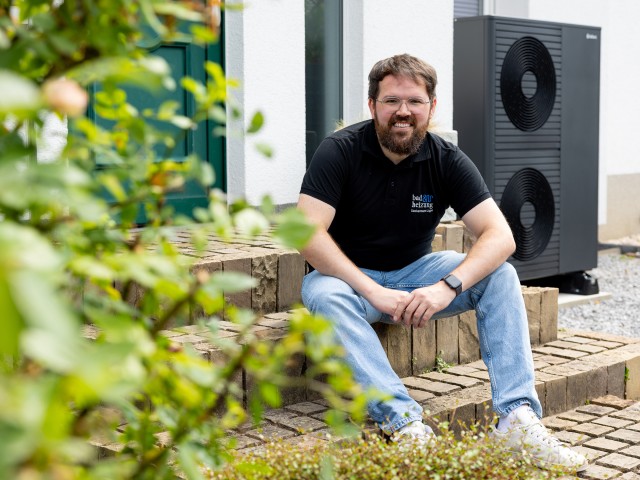
A space saver with style
How a heat pump makes an older building in Bochum energy-efficient for the future.
Read more
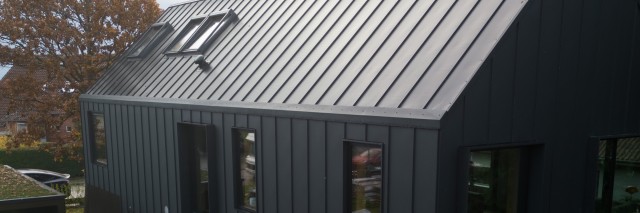
The Vaillant Group is a leading provider of energy-saving and environmentally friendly heat pumps. These obtain about three quarters of their energy for free from the environment and are suitable for most buildings.
In the series ‘The Future Has Begun', we present remarkable buildings and architectural projects that have one thing in common: heat pumps provide comprehensive heating comfort in an economical and environmentally friendly way.
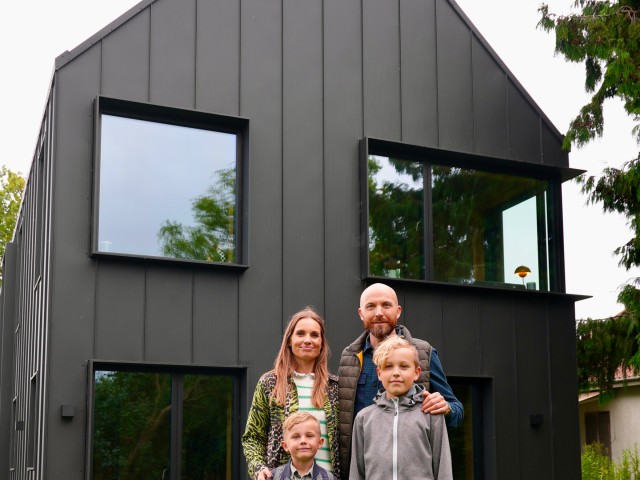
The desire to live more sustainably is widespread in Denmark. According to surveys , eight out of ten people in the Scandinavian country want to live more environmentally consciously. That was also the goal of Jette and Simon Bullinger when they began building their house a few building their house a few years ago. Green building and living without compromising on aesthetics, indoor climate and comfort.
When Jette and Simon think back to the construction phase, they remember many considerations about what was important to them in their new home. "Many people believe that environmentally friendly living is a bit dogmatic and uncomfortable. But you can build environmentally friendly without moving into a clay-covered straw house," says Simon. And Jette adds: "It's easy to get a little lost in the jungle of sustainability criteria. But it doesn't have to be that complicated. The heat source is very important because it's something that will remain in place for a long time."
When choosing their heat supply, the Bullingers had to decide between district heating and a heating system. Ultimately, two factors were decisive. Firstly, district heating plants differ considerably in terms of combustion. Heat generation can be particularly environmentally friendly. However, this is not necessarily the case. Secondly, the financial aspect had to be taken into account. Gas was more expensive, and although district heating will actually be an option in their place of residence in 2028, the heat pump solution proved to be the better alternative.
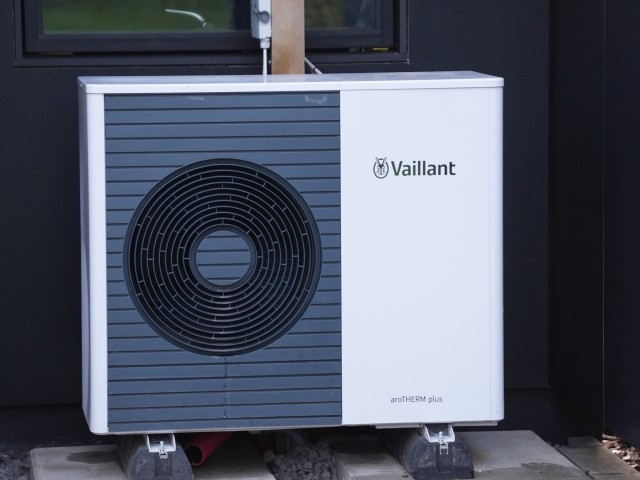
Since the heating system's energy consumption is low and the house is very well insulated, a small heat pump is sufficient to meet the family's heating needs. It was also important to the Bullingers that their heat pump was suitable for use in a nordic climate and, if possible, manufactured nearby. After all, importing a product from the other side of the world causes a considerable amount of pollutant emissions. The refrigerant also played an important role in the overall environmental balance of the . In comparison, the Vaillant heat pump was convincing in all respects.
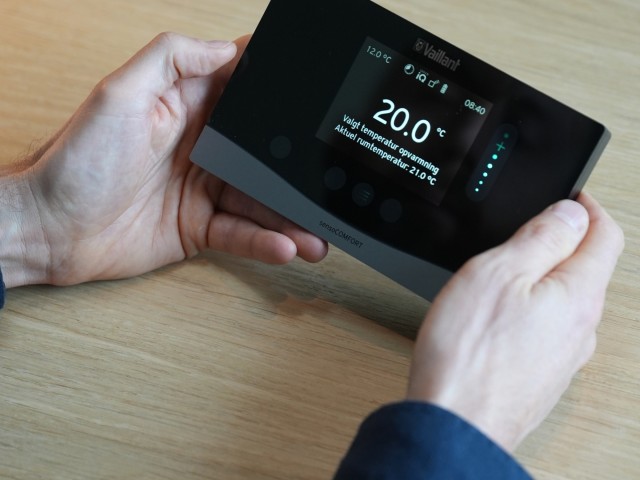
Before the Bullinger family moved into their dream home, the builders expected the heat pump to make audible operating noises. "Once I stood next to the heat pump and waited for the fan to actually start up," says Simon. "And then I realised that although it was running, I couldn't really hear it. I was very surprised that there was such a big difference between the perceived noise and the measured level that we could read."
The noise emissions of heat pumps vary greatly from manufacturer to manufacturer. Vaillant attaches particular importance to keeping noise emissions as low as possible as low as possible, because this is a very important decision-making criterion for customers.
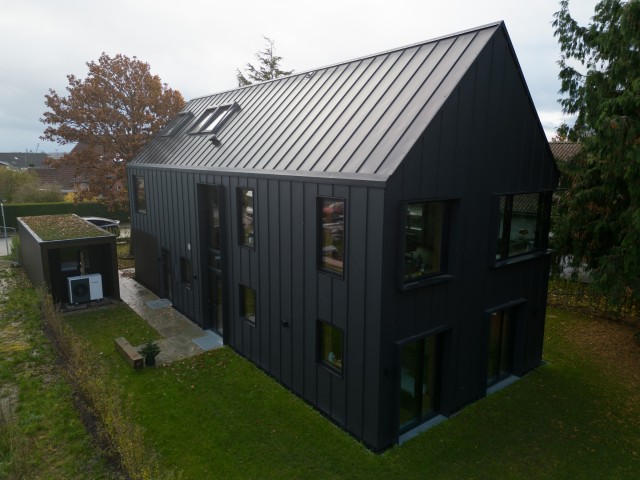
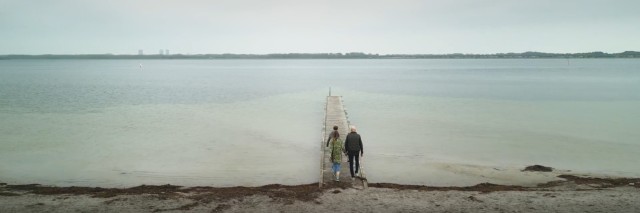
The result is a three-storey house located about 200 metres from the port of Hvidovre. And a house that emits only half as much co₂ as the stricter limits for single-family homes in Denmark will require in the future.
Both Jette and Simon would recommend that others who are considering environmentally friendly construction and living seek advice from experts. "I think many people decide to do the same as their neighbour because they believe that's normal. But maybe the neighbour thought the same thing. For example, we are not experts on heat pumps, but we asked people who are knowledgeable about them," says Jette. "A heat pump is a big investment, but it's important to think long-term."