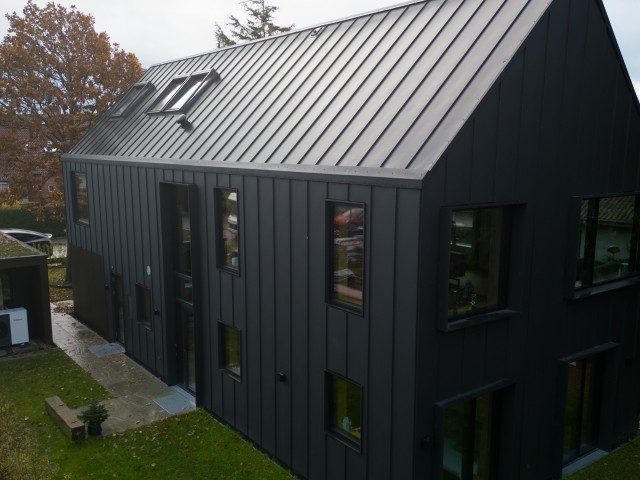
The future has begun – on Murano
How a traditional glass manufacturer is transforming its energy supply with modern heat pump technology
Read more
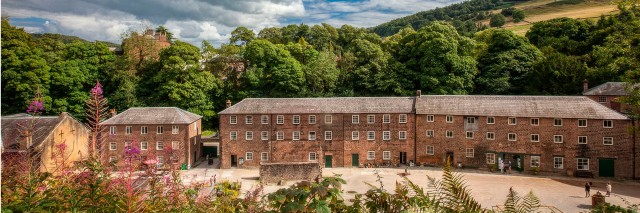
How a mill on a UNESCO World Heritage site is reviving water power with modern heat pump technology.
The Vaillant Group is a leading provider of energy-saving and environmentally friendly heat pumps. These obtain about three quarters of their energy for free from the environment and are suitable for most buildings.
In the series ‘The Future Has Begun', we present remarkable buildings and architectural projects that have one thing in common: heat pumps provide comprehensive heating comfort in an economical and environmentally friendly way.
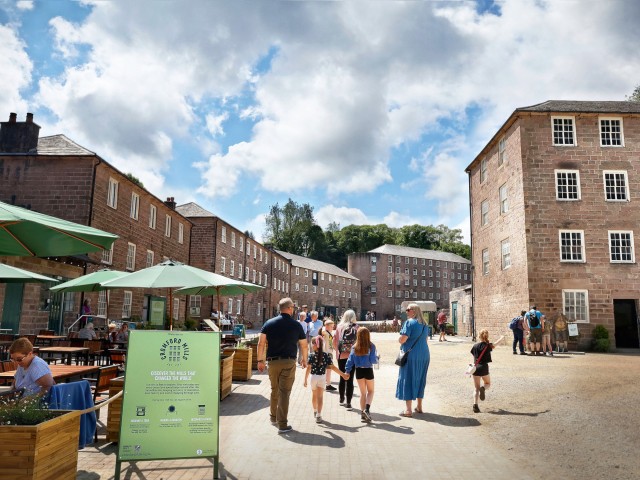
Cromford Mills in Derbyshire, UK, is considered the birthplace of the modern factory system. Built in 1771 by the industrialist Sir Richard Arkwright, it was the world’s first water-powered cotton spinning mill and helped trigger the Industrial Revolution. Today, the site is part of the UNESCO World Heritage-listed Derwent Valley Mills and attracts thousands of visitors each year.
Preserving this unique heritage while ensuring a sustainable future is a central goal of the Arkwright Society, which manages the site. The challenge: how to heat historic buildings efficiently and responsibly without compromising their structure or cultural value.
The answer lay in reconnecting with the site’s origins—water as a source of energy—but reimagined through modern technology. What once powered spinning machines now drives a forward-looking energy concept.
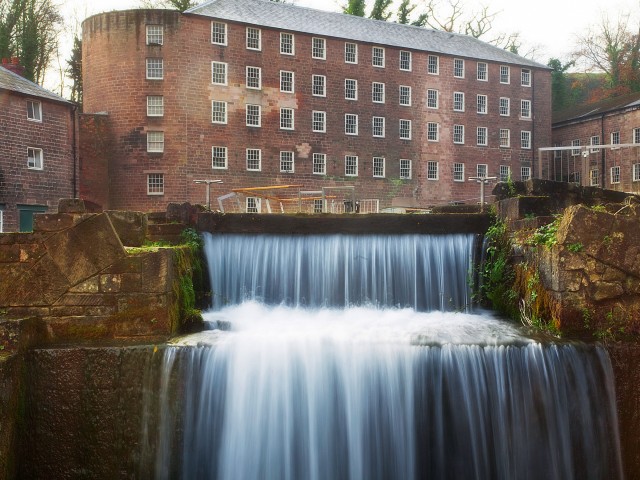
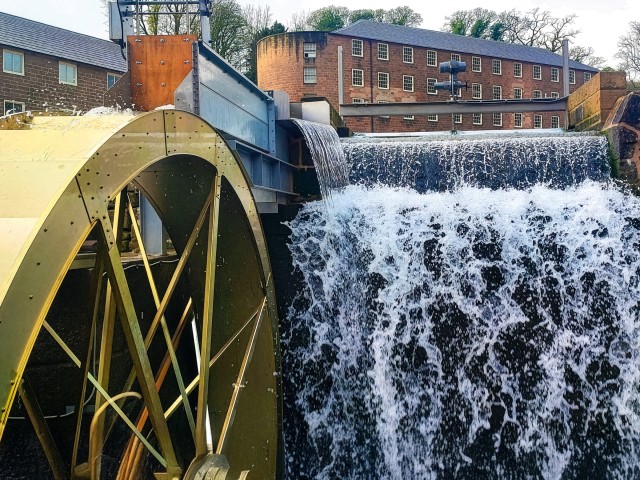
At the heart of the project is the intelligent reuse of an existing natural resource: Bonsall Brook, the watercourse that originally powered the mills. The restored infrastructure includes a refurbished waterwheel site and a modern 17 kW turbine installed in 2023.
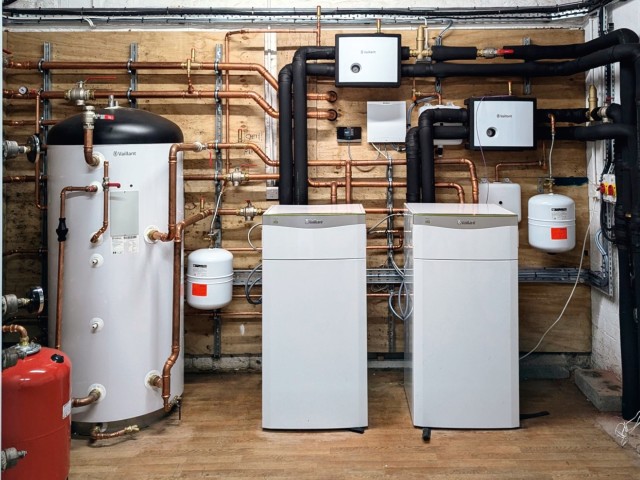
This renewable electricity is used to operate a highly efficient heating system based on Vaillant technology:
Two flexoTHERM ground source heat pumps (brine/water)
Electricity generated on-site via waterwheel and turbine
A newly installed system room integrated into existing buildings
The system works as a closed and efficient loop:
The flowing water generates electricity and provides heat energy. The electricity powers the heat pumps. The heat pumps use the heat energy to raise the temperature to a usable level, and the buildings are heated sustainably.
This approach ensures that the energy consumed is lower than the energy generated by the water flow, creating an exceptionally efficient and low-emission solution.
The concept bridges centuries of innovation: from Arkwright’s original water-powered machinery to a modern renewable energy system that supports both heritage preservation and climate goals.
The project demonstrates how historic sites can meet modern sustainability standards without losing their identity. The benefits are both environmental and financial:
Significant reduction in CO₂ emissions through renewable energy use
Lower operating costs thanks to self-generated electricity
Long-term energy independence for the site
Preservation of cultural heritage combined with modern efficiency

Because the waterwheel and turbine provide free energy, the operational costs of the heating system are considerably reduced—an important factor for a non-profit organization managing a large heritage site.
For Cromford Mills, this transformation is more than a technical upgrade. It is a symbolic continuation of its legacy: innovation driven by available resources.
By combining historical infrastructure with cutting-edge heat pump technology, the site proves that even centuries-old industrial landmarks can become models for a sustainable future.